Comfortable Skin Preparation Before Makeup on Mature Skin
Makeup on mature skin does not require a single compulsory style or a promise to conceal age. Start with comfort, familiar products and the look you actually want. This guide concerns preparation and practical application choices, not a treatment for wrinkles or a tested product ranking. Individual skin conditions and prescribed care need their own advice.
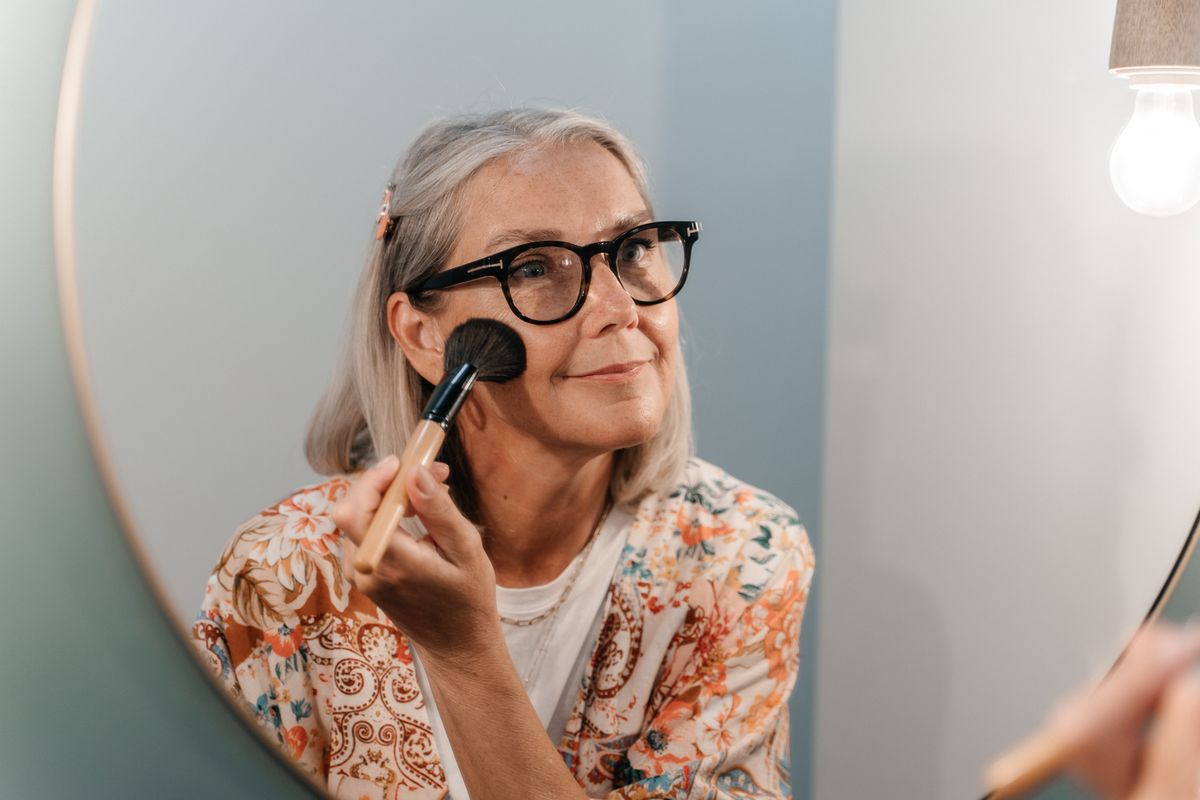
Photo: Pexels · Pexels License. Illustrative photograph of the subject; not a tested result, current condition report or endorsement. Display may crop the original.
Choose the finish you want
Describe the desired look in ordinary terms: light coverage, a more polished finish or comfortable everyday makeup. Avoid using younger as the only goal, because it provides no clear application instruction and encourages comparison with edited imagery. Normal skin texture does not mean preparation has failed. You can enjoy makeup while leaving lines visible. The useful question is what feels and looks right to you in the actual setting.
Begin with familiar gentle care
Use the cleansing and moisturizing products you already understand, following their directions and any clinical plan. Do not scrub or peel immediately before makeup to create an imagined perfectly smooth surface. If the skin is irritated or painful, pause optional cosmetic experimentation and seek advice as needed. A familiar simple preparation is easier to evaluate than several new products introduced before an occasion when there is little time to respond to a problem.
Let each product have a purpose
Decide whether you need a particular optional primer or whether the familiar care and makeup already work together. Do not use every item in a set because the sequence looks professional. Keep sunscreen directions intact for daytime use. Mixing a sunscreen into another product to simplify texture does not establish the labeled protection. A preparation step should solve a real practical problem rather than fill an empty row in an influencer’s diagram.
Check tools and product condition
Use suitable clean tools and keep cosmetics in appropriate condition. FDA advises against sharing makeup and recommends attention to hygiene and storage. Do not add water to revive an old product or borrow an unfamiliar eye cosmetic because it matches the outfit. Keep the original product identity available. A clean-looking compact is not a guarantee that every handling or storage practice has been appropriate.
Try a small familiar application first
Apply according to the makeup product’s directions and assess an ordinary area before continuing with unnecessary layers. If the finish is uncomfortable or looks heavier than intended, use the product’s appropriate removal method rather than rubbing harder. Do not assume that another serum or more powder will fix every issue. The problem may be the amount, the combination or simply a finish you do not enjoy.
Review in relevant light
Look at the makeup in the sort of light where it will be worn, allowing for the fact that all skin looks different under close magnification and harsh lighting. Do not judge success only through a filtered phone image. Consider comfort while speaking and moving, not just a still pose. If you plan an occasion look, practice with familiar items beforehand so the day itself is not an uncontrolled experiment involving several new products.
A hypothetical occasion preparation
Imagine an adult attending a daytime gathering who wants comfortable light coverage. They use familiar care, follow sunscreen directions, choose a modest amount of their known makeup and check the finish in normal light. They decide not to add a new peel or multiple primers. This is an application-planning example, not a claim that a particular formula was tested on mature skin or that all adults prefer minimal coverage.
Finish with removal and an honest review
Plan how the makeup will be removed gently afterward and clean tools appropriately. Record a practical adjustment for next time, such as using fewer optional layers, rather than describing the face as the problem. If irritation occurred, retain product details and seek appropriate advice when needed. Makeup can be expressive, polished or playful at any age. The preparation process should support that choice without presenting visible age as something a professional-looking routine must eliminate.
Your working checklist
Checkmarks stay in this browser when storage is available. They do not submit information or complete a purchase.
Put it into practice
- Choose the desired finish without using age concealment as the only goal.
- Use familiar gentle care and keep clinical instructions unchanged.
- Include optional preparation only when it has a clear purpose.
- Check hygiene, product condition and tools before application.
- Start with an appropriate modest application and assess comfort.
- Review in ordinary relevant light rather than a filtered image.
- Remove gently and record one useful adjustment for another occasion.
Before you finish
- Normal texture is not described as a failure.
- No new harsh treatment is introduced to prepare for an event.
- Sunscreen is not diluted into an improvised mixture.
- Check comfort and product compatibility without assuming another person’s finished appearance predicts your result.
Common questions
Does mature skin require one makeup style?
No. Choose the finish you enjoy and can wear comfortably. Age alone does not prescribe coverage level, color or a particular cosmetic aesthetic.
Should I exfoliate strongly before an event?
Do not introduce a harsh new step to chase a smooth surface. Use familiar care and ask about ongoing skin concerns rather than experimenting under time pressure.
Can I fix every texture issue with more layers?
Not necessarily. Reassess the amount and combination according to product directions. More preparation can make the routine harder to understand rather than improve the finish.
Does a filtered photo prove the look worked?
It does not show ordinary texture reliably. Assess comfort and appearance in relevant real light, without treating every visible line as a problem to remove.